
Fly Fishing Leaders & Tippet Buyers Guide

Leaders and Tippet Buyers Guide - Introduction
Leaders and tippet shape how your fly lands, drifts, and ultimately how natural it looks in the water.
Small adjustments here can make a noticeable difference — especially on clear rivers, lakes, and pressured fisheries across Canada. When your leader and tippet are matched properly, casting feels easy and presentations become more consistent.
The leader transfers energy from the fly line to the fly and controls how smoothly everything turns over. The tippet is the final connection, to your fly, you can adjust it for length and size to dial in your presentation.
This guide breaks them down separately and focuses on what actually changes performance on the water, with practical examples to help you choose confidently for the water you fish most.
Fly Leaders - Overview
Fly leaders shape how your fly casts and how it lands.
They transfer energy from the fly line to the leader and play a big role in presentation and control. Leaders are usually designed in a taper that works thick on the back to thin on the front, it's that consistent taper that allows power to roll down the leader to the fly without the leader hinging or buckling in tangles.
The leader sets up the presentation. Tippet fine-tunes strength and diameter at the very end.
What matters most in a Fly Leader
When choosing a fly leader, a few factors have the biggest influence on how your fly turns over and presents on the water.
- Leader length: Shorter leaders help cast weighted nymphs and streamers more reliably. Longer leaders allow small dry flies to land softly in clear or pressured water. Matching length to your fly choice and water type makes a noticeable difference.
- Taper design: Taper controls how energy moves through the leader. More aggressive tapers (often labelled "bass", "salmon", or "streamer") straighten heavier or wind-resistant flies more easily. Longer, finer tapers create smoother turnover for lighter flies.
- Fly size and weight Fly choice should guide your leader decision. A leader built for small dry flies will struggle casting larger streamers. Likewise, a leader designed to move heavier flies may feel overly strong and clunky for delicate dry fly work.
- Technique and water type Water speed and presentation style do matter. Calm, clear water often benefits from added length and softer turnover. Faster current and nymphing setups usually call for stronger turnover and control. Matching your leader to how you’re fishing makes everything feel more balanced.
- Material: Leaders are usually made of nylon or fluorocarbon, both have different properties. Nylon is generally considered more versatile as the material is neutrally buoyant, allowing you to fish floating flies and indicators. Fluorocarbon leaders are more durable, handling abrasion better, they also sink, allowing your fly to get down further.
Fly Leader Decision Checklist
Before choosing a fly leader, work through these questions:
- What flies are you fishing most often?
Small dries often pair well with longer, finer leaders. Weighted nymphs and streamers usually turn over better with shorter or stronger tapers. If you fish dry flies and indicators, make sure you're fishing a nylon leader. - What kind of water are you fishing?
Clear, slower water — like a low summer trout river or a calm spring creek — often benefits from a longer leader (for example, 12–15 feet) to help small dries land softly and keep the fly line farther from the fish. Broken, faster water — such as pocket water, riffles, or heavier runs — typically allows for a shorter leader (for example, 7.5–9 feet) that turns over more confidently and gives you better control - How important is turnover versus delicacy?
If your fly lands harder than you’d like, consider more length. If turnover feels weak, consider shortening or stepping into a stronger taper. - Do you change flies frequently?
Anglers who switch fly sizes often may prefer a middle of the road leader size that handle a wider range of flies without constant adjustment. - How comfortable are you managing longer leaders?
Longer leaders can improve presentation but may require more precise casting, especially in wind or tight spaces. - What is an "X"?
The "X" system is a way of measuring the thickness of the thin line (tippet) end of a leader. The range goes from 0X-8X with 0X being the thickest and 8X being thinnest. Thinner lines are more flexible and delicate making them ideal for smaller flies, where thicker leaders are more powerful allowing them to cast larger flies. The "X" system is largely only used for trout leaders, other leaders will be marked in a more standard "lbs" rating.
Takeaway
Fly leaders have a big influence on how naturally your fly behaves.
Small adjustments to length and taper can noticeably improve turnover and presentation. When your leader matches the flies you’re fishing and the water you’re on, everything starts to feel cleaner and more controlled.
If you’re unsure which direction fits your home water best, we’re always happy to talk it through. We fish these rivers ourselves and can help you dial in a setup that feels right.
Staff Fly Leader Picks
- Scientific Anglers Absolute Trout Leader (Good All Around)
We regularly recommend this leader for trout anglers because it offers consistent turnover and reliable presentation across a wide range of dry fly and nymphing situations. If we had to choose just one leader for general purpose trout fishing a 9' 4x or 5x size would be tough to beat. - Scientific Anglers Absolute Bass Leader (Good all around Bass leader)
This is a staff favourite when throwing larger or more air-resistant flies, as the stronger taper turns over bass flies more confidently without sacrificing control. A 12lb leader is a good starting place for general bass fishing, with 16lb being better for bigger topwater flies. - Scientific Anglers Absolute Fluorocarbon Leader (Smart Upgrade For Subsurface Presentations)
Our staff often suggests this leader when abrasion resistance and durability matter most, especially for anglers fishing around structure or in situations where longevity and strength are priorities.
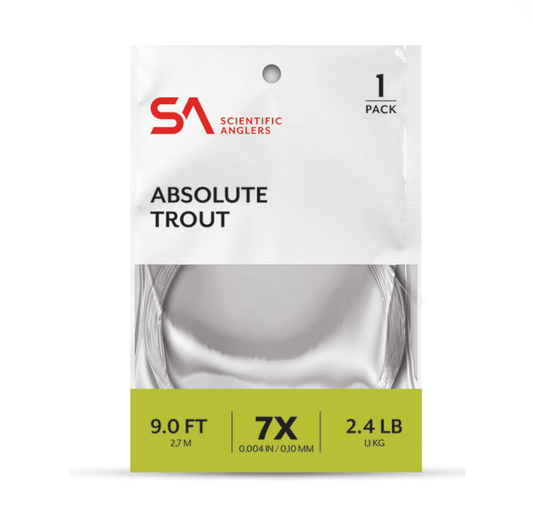
Scientific Anglers - Absolute Trout Leader 9'
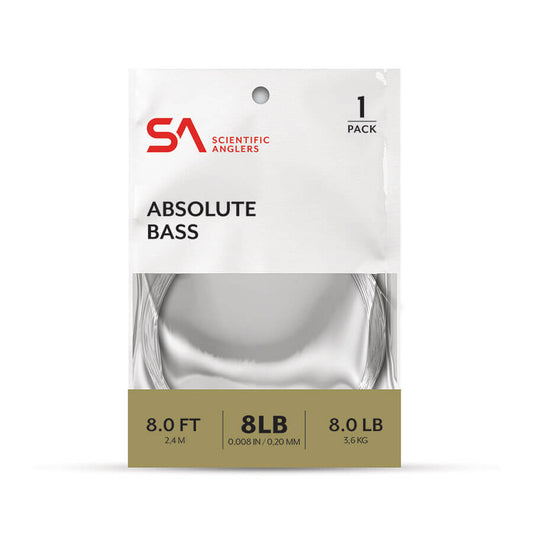
Scientific Anglers - Absolute Bass Leader (1pk)

Scientific Anglers - Absolute Fluorocarbon Leader 9'
Fly Tippet - Overview
Tippet is the final connection between your leader and your fly.
It fine-tunes the strength, diameter, and abrasion resistance of your leader, and those small adjustments can make a noticeable difference in how your fly drifts and how confidently you fight fish.
What Matters Most in Fly Tippet:
When choosing tippet, a few key factors have the biggest impact on presentation and reliability.
- Diameter: Diameter has a direct impact on presentation. Thinner tippet helps small dry flies drift naturally in clear, slower water. For example, fishing size 18–20 dries on a low summer trout river often calls for finer tippet to keep drag down. Slightly thicker tippet gives you more power when nymphing, fishing heavier flies, or working faster current.
- Diameter to Match Leader: The diameter of the tippet material you're tying to your leader should match the leader or be 1-2 sizes smaller. Leaders should continually taper smaller, so make sure your tippet isn't thicker than the leader it's going to.
- Strength: Strength should match both the fly and the fish. If you’re fishing larger nymph rigs, streamers, or targeting bigger trout, heavier diameter tippet makes sense.
- Material: Material affects feel and abrasion resistance. Nylon tends to be supple and forgiving, which works beautifully for dry fly fishing.
Fluorocarbon offers added abrasion resistance and sinks slightly, making it a strong option when fishing nymphs or around rocks and structure. Choosing based on technique and environment keeps things simple. - Length of tippet added: The amount of tippet you add changes how the leader behaves. Adding a moderate section gives you flexibility when changing flies and adjusting depth. Longer lengths can be useful when presenting delicate dry flies, shorter gives more power for casting heavier flies.
A Few Things to Keep in Mind
- Most anglers fish well with just a few tippet sizes. For example, many trout anglers comfortably cover small dries through light nymph rigs with 4X–6X, adjusting up or down depending on fly size and water clarity. When fishing heavier nymph setups, streamers, or targeting larger fish — such as Great Lakes trout or steelhead — stepping into 0X–3X adds durability and confidence without compromising control in most conditions.
- When tippet size, fly size, and water type feel aligned, presentations become more consistent and break-offs become less frequent.
Fly Tippet Decision Checklist
Before choosing tippet, work through these questions:
- What size flies are you fishing most often?
Small dries typically pair well with finer tippet. Larger nymphs or streamers often feel more secure on slightly heavier sizes. - What kind of water are you fishing?
Clear, slow water may reward a finer touch (lighter tippet). Broken or faster water allows for stepping up in strength. - Does the tippet size match your leader?
Keeping sizes matched or having the tippet one to two sizes lighter than your leader maintains the taper giving smoother turnover and better control. - How much abrasion are you dealing with?
Fishing near rocks, logs, or structure often benefits from stronger or more abrasion-resistant material like fluorocarbon. - How often are you breaking off or changing flies?
Frequent break-offs are a good sign the tippet may be too light for the flies or conditions you’re fishing. - Do you value presentation or durability more in this situation?
For example, when fish are selective, finer tippet can help; when fishing environments are tougher, durability often matters more than subtlety.
Answering these questions will help you choose tippet that balances presentation, strength, and reliability for how you actually fish.
Takeaway
Tippet is a small adjustment that can make a big difference.
When diameter, strength, and material match your flies and your water, drifts feel cleaner and fights feel more controlled.
A small range of well-chosen tippet sizes will cover most situations comfortably. If you’re unsure which sizes make sense for the water you fish most, we’re always happy to help you dial it in.
Staff Fly Tippet Picks
- Scientific Anglers Absolute Trout Tippet (Beginner - good all around)
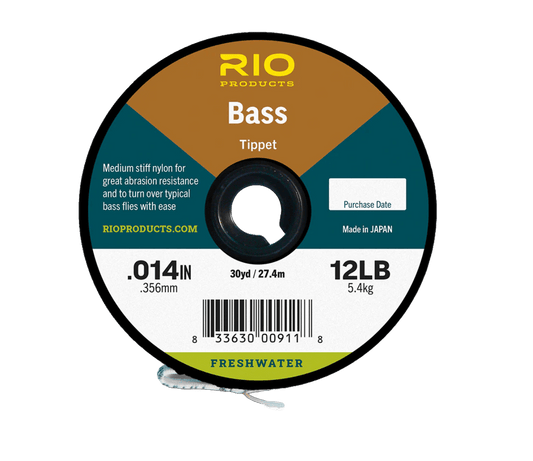
We often recommend this tippet as a dependable everyday option, offering consistent strength and knot reliability for trout fishing across a wide range of conditions. - RIO Bass Tippet (Good all round for Bass)
Our staff typically points anglers toward this tippet when strength and toughness matter most, making it a strong choice for larger flies, aggressive fish, and demanding bass fishing situations. - Scientific Anglers Absolute Trout Fluorocarbon Tippet (Smart Upgrade)
This is a staff go-to when anglers want a bit more abrasion resistance and durability, especially when fishing subsurface or around rocks and structure.
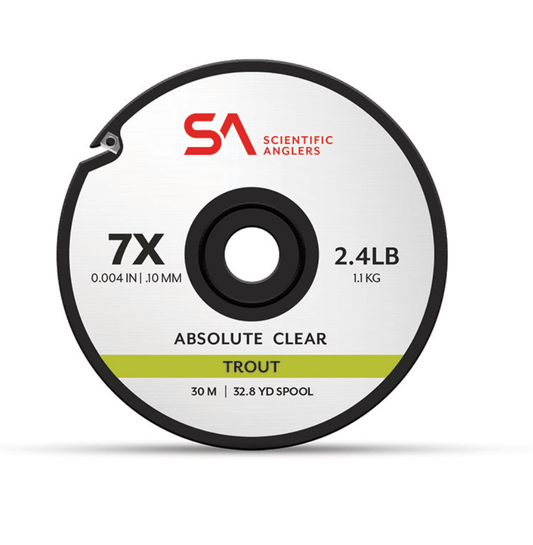
Scientific Anglers - Absolute Trout Tippet Clear
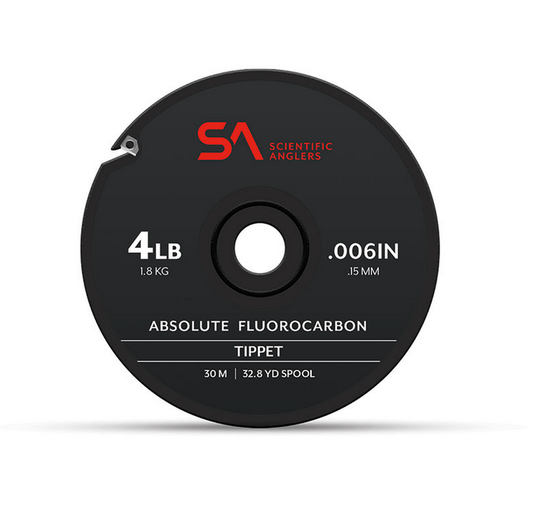
Scientific Anglers - Absolute Fluorocarbon Tippet
Ready to dial in your presentation? Browse all our leaders and tippet to match the right material, diameter, and strength to your next outing.
We're here to help
If you’re unsure about any of the Leader and Tippets or any info in this guide, you don’t have to figure it out alone. Helping anglers sort through gear decisions is what we do every day, whether it’s your first setup or a thoughtful upgrade.
If you’d like a second opinion, give us a call (647-347-7370) or hit the button below. We’re always happy to help - and remember, we’re anglers too.
Chris Krysciak - Store Manager