If you’ve never chased pike on the fly, this is the moment to change that. Spring is hands-down one of the most exciting times of the year to target them!
This isn’t just another fishing window—it’s big fish season. Fresh off the spawn, pike are still holding in shallow water, often in places you can reach without a boat. We’re talking back bays, marshy shorelines, and creek mouths where some truly massive fish are sitting in surprisingly skinny water. It’s visual, it’s aggressive, but these fish don't stay in shallow water late into the season so it’s worth making the time.
Understanding Spring Pike Behaviour
Pike spawn early in the spring, moving into extremely shallow water to do so. In some cases, they’re so shallow you’ll actually see their backs breaking the surface. Once they’ve finished spawning, they don’t immediately disappear into deeper water. Instead, they slide just slightly off those spawning areas and hang nearby.
That means your focus should still be on shallow zones—especially areas that warm up quickly. Creek mouths are a prime example, as they often bring in slightly warmer water than the main lake. Sandy back bays are another key target. These areas absorb and reflect sunlight, creating warmer micro-environments that attract pike looking to recover and feed.
Because of this, you’ll often find fish in less than five feet of water. In the right conditions, you can even sight fish them, which adds a whole different level of excitement to the experience.
Keep It Shallow, Keep It Slow
One of the biggest mistakes anglers make early in the season is fishing too deep or too fast. Cold water changes everything. Pike aren’t looking to burn energy chasing down fast-moving prey, they’re much more likely to react to something slow, controlled, and easy to grab.
That’s why a floating line is your best starting point. It allows you to keep your fly in the strike zone longer and present it at a pace that matches the fish’s mood. You can twitch it, pause it, and really work it methodically through shallow water.
There is a time and place for intermediate lines, particularly if fish slide into that five-to-ten-foot range—but on opener, a floating line will cover most situations effectively.
When it comes to rods, you’re generally looking at something in the 8–10 weight range. Not because the fish are always huge (though they can be), but because the flies are. You need enough backbone to comfortably cast larger patterns and handle a strong fish when it eats.
Leaders Matter!
Pike are famous for their teeth, and for good reason. A standard leader won’t stand up to them, so bite protection is essential.
A great option is something like the Scientific Anglers Absolute Predator Toothy Fish Leader, which uses titanium wire. Titanium has a couple of key advantages—it’s lighter than steel, allowing for a slower presentation, and it’s far more resistant to kinking, meaning it’ll last through more fish.
If you prefer building your own leaders, just be mindful of your breaking strengths. Your wire might be rated at 30–40 pounds, but your fly line typically breaks closer to 30. If your leader is stronger than your line, you risk damaging your fly line when you snag something. A good rule is to use a 20–25 lb breaking-strength leader before attaching your wire.
Fly Selection: Smaller Than You May Think
Early season pike fishing doesn’t mean throwing the biggest flies in your box. In fact, the opposite is often true.
Because the water is cold, pike are more inclined to eat smaller, more manageable meals. On top of that, much of the available forage this time of year consists of young-of-the-year baitfish—small, freshly hatched fish that are easy targets.
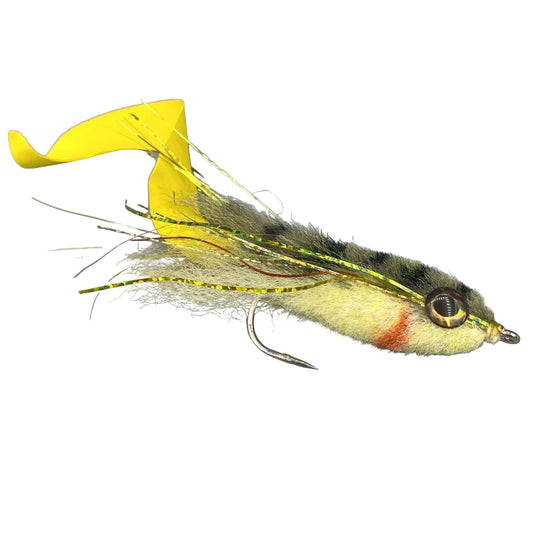
Flies in the 4–5 inch range are perfect. Patterns like deceivers, bunny leeches, and simple baitfish imitations are all excellent choices. If you’re fishing a trophy system, you can size up slightly, but there’s rarely a need to go oversized this early.
Color-wise, keep it simple. Black is a standout in spring, offering strong contrast in a variety of conditions. White and natural baitfish tones are also must-haves and will cover most scenarios you’ll encounter.
Don’t Forget Release Tools
This is one piece of gear you don’t want to overlook. Pike have serious teeth, and trying to unhook one without proper tools is a quick way to end your day early.
A solid pair of long needle-nose pliers or a dedicated hook remover is essential. Tools like those from Loon Outdoors give you the reach you need to safely remove hooks while keeping your hands well clear of danger.
It’s not just about protecting yourself—it’s also better for the fish. Quick, clean hook removal means less stress and a healthier release.
A Short Window Worth Taking
Spring pike fishing is one of those opportunities that doesn’t last long, but while it’s here, it can be incredible. Big fish, shallow water, and aggressive eats—it’s a combination that’s hard to beat.
Whether you’re wading into a back bay or sneaking into a quiet shoreline in a canoe, this is your chance to experience something a little different. And if you’ve never tried it before, there’s a good chance you’ll be hooked after your first fish.